With CCTV cameras throughout the facility, good lighting and wide corridors, the world-class, high-tech Johannesburg International Transport Interchange (JITI) facility is designed to be safe and attractive, transforming long distance and cross border travel.
The Johannesburg Development Agency (JDA), on behalf of the City of Johannesburg, has been implementing the construction of JITI, a state-of-the-art, 50 000m² international long distance and cross border transport and shopping hub.
Construction is at 85% completion and the vision of a facility is to usher in a new era for long distance travellers, with amenities to make departure and arrival a pleasant experience. With 3 300m² devoted to retail - for both large retail outlets, banks, ticketing offices, food courts and informal traders, the facility will also create a variety of economic opportunities, provide social amenities for inner city users and residents.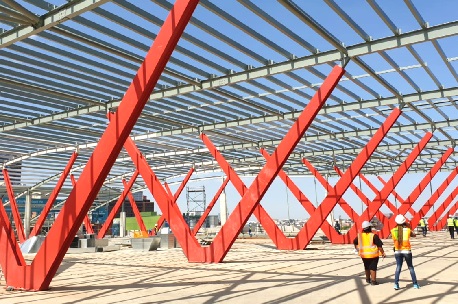
To banish long wait by long distance travellers for buses and taxis in the inner city, the facility includes a bus terminal for cross-border buses as well as ranking and holding space for 648 taxis; ranking space for 158 taxis and ranking for 20 buses.
Security of the facility will be managed from a control room equipped with a building management system, including CCTV cameras and access control.
The project’s construction started in July 2016 and in May of 2019, a new contractor was appointed for completion of the project.
Member of the Mayoral Committee for Transport, Cllr Nonhlanhla Makhuba says: “The City of Johannesburg continues to experience an increase in demand for road space.”
“The state-of-the-art JITI will be one of the critical projects which will ensure that efficient mass public transport networks and connections, transit-orientated multi-use precincts, together with strategic land-use planning and zoning regimes are realized so we connect our people to opportunities to live, work and play in the city,” says MMC Makhuba.
The construction of this project is also playing a role in job creation and skills development, with 30% of the contract value being awarded to SMMEs. A total of 18 SMMEs and 34 local labourers were appointed for the execution of the portions of the works in the infrastructure project.
The project, which is expected to be completed in May 2020, will be handed over to the City’s Department of Transport on completion.

