Page Content
As Johannesburg prepares to mark 140 years since its establishment in October 1886, the Johannesburg Development Agency (JDA) reflects on the evolving physical character of a city that has never stood still. From its origins as a gold-rush settlement to its emergence as one of South Africa's major economic centres, Johannesburg has continually evolved in response to changing economic conditions, population growth, social realities and the aspirations of its people.
Today, Johannesburg is a diverse metropolitan city with an estimated population of 6.18 million, a significant proportion of whom are under the age of 35. Its continued transformation is shaped by population movement, economic activity, infrastructure, technology and changing patterns of urban life. For more than two decades, the JDA has helped reshape Johannesburg's public environment through area-based development and targeted public-space interventions. Its work has evolved in step with the city.
Early interventions focused largely on the inner city, with public-environment upgrades in areas such as Braamfontein, Hillbrow, Newtown and the Fashion District. These projects improved the quality, functionality and experience of established urban areas while advancing broader regeneration objectives.
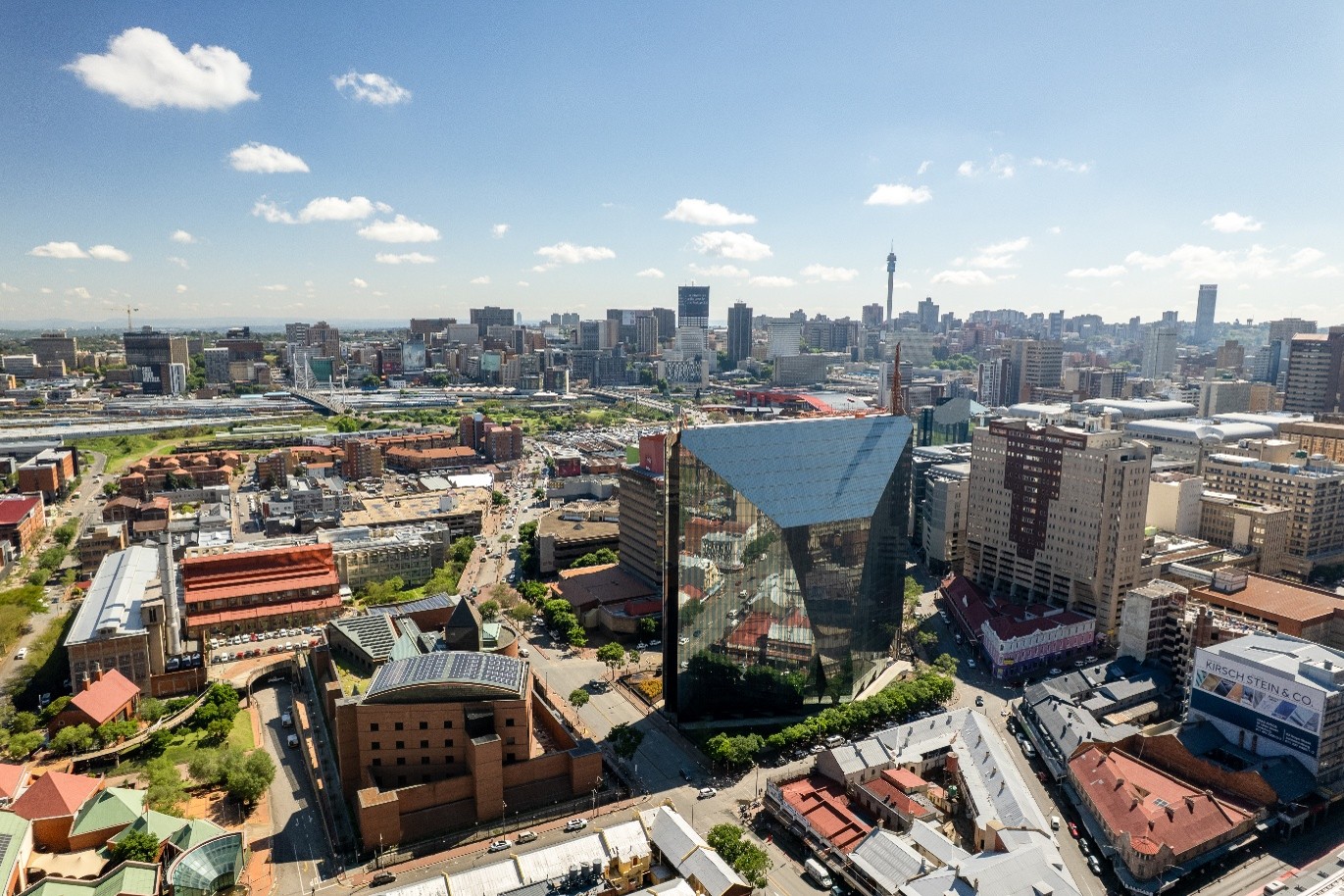
In the Gandhi Square East Precinct, upgrades have supported the renewal of an established inner-city district. Improvements along Goud Street include enhanced pedestrian areas, lighting, landscaping, and other elements designed to improve the precinct's functionality and public experience. These interventions reflect an important principle of urban development: shaping a city's future also means renewing the places that already define its identity.
Johannesburg's long-term development is guided by the Joburg 2040 Growth and Development Strategy, supported by the City's Integrated Development Plan (IDP) and annual implementation programmes. Together, these instruments provide a framework for addressing current challenges while advancing the city's long-term vision. For the JDA, this means continuing to shape public spaces and precincts that respond to Johannesburg's changing needs.
Projects that will help define this next chapter include the Johannesburg High Court Precinct and the Archbishop Desmond Tutu Precinct.
Established in 2001, the JDA's 25-year history represents one chapter in Johannesburg's 140-year story. The agency does not define the city or shape its evolution alone. Rather, it contributes to a broader process involving communities, businesses, residents, professionals, City departments and municipal entities.
“The JDA's role is to translate the City's development priorities into places and environments that respond to community needs and contribute to Johannesburg's future. Our focus is not only on what we build, but also on how those interventions shape the way people experience and participate in Johannesburg," said JDA CEO Themba Mathibe.
Written by Elias Nkabinde
14/10/2026
Recommended for you:
JDA helps Joburg honour its heritage and shape the future
Johannesburg Development Agency projects finalists in GIfA Awards
From history to the future: Joburg City Library reopens in style
JDA launches Universal Design Access Plan to improve public transport accessibility in Johannesburg
Joburg champions barrier-free mobility through universal design plan
To stay informed about the latest developments in the city, connect with us at:
X: @CityofJoburgZA
Facebook: City of Joburg
Instagram: CityofJoburg
TikTok: @CityofJoburg
LinkedIn: City of Johannesburg
YouTube: [CityOfJoburgZA](https://www.youtube.com/@CityOfJoburgZA/videos)

